Kenya's 2027 General Election is still months away, but the battle over its credibility has already begun. And this time, the biggest questions are not just about who wants to become president, but about who controls the process through which that president will be elected.
On 19 November 2026, Kenya's political temperature rose following a dramatic walkout by opposition leaders during a consultative meeting with the Independent Electoral and Boundaries Commission (IEBC).
Among those who walked out were former Deputy President Rigathi Gachagua, Wiper Party leader Kalonzo Musyoka and Nairobi Senator Edwin Sifuna.
Their argument? The IEBC's meeting agenda did not adequately address the electoral reforms and concerns they had repeatedly raised ahead of the 2027 elections.
The commission, led by Chairperson Erastus Ethekon, was equally critical of the decision, arguing that the leaders had left before substantive discussions could take place.
But beyond the political exchanges, there is a much bigger conversation that every Kenyan should be having.
Can we trust the systems, institutions and processes that will determine the outcome of the 2027 General Election?
1. The voters' register: Who exactly will be voting?
One of the opposition's central demands is a comprehensive audit and cleanup of the voters' register.
They want the commission to address concerns surrounding:
- Duplicate voter registrations.
- Names of deceased persons remaining on the register.
- Registration of ineligible voters.
- Eligible Kenyans who have not been registered.
- Alleged barriers to obtaining national identity cards, which are necessary for voter registration.
This is an important conversation because the credibility of an election begins long before the first ballot is cast.
Imagine a young Kenyan who has finally reached voting age, obtained an ID and is ready to participate, only to encounter difficulties registering.
Now imagine another citizen questioning whether the register accurately reflects the people eligible to vote.
Both situations demand institutional accountability.
An accurate and independently verifiable voters' register should not be a political favour. It should be a basic requirement of electoral administration.
2. Election technology: Are we prepared for the digital side of democracy?
This is perhaps one of the most technically important issues surrounding the 2027 elections.
The opposition has raised concerns about the Smartmatic election technology contract, whose reported expiry date is 24 November 2026.
The technology is relevant to biometric voter registration, voter identification and electronic transmission of election results.
There are questions about the transition to a replacement system, particularly given procurement disputes and ongoing legal challenges.
On 22 November, The Star reported that IEBC Commissioner Anne Nderitu had acknowledged delays in acquiring critical election materials, including election technology and ballot papers, partly because of legal challenges affecting procurement.
Think about what this means.
We are approaching a national election that will depend significantly on technology, yet questions about continuity, procurement, testing and certification remain part of the public conversation.
Technology is not simply about having biometric kits at polling stations.
It involves:
- Secure voter identification.
- Reliable results transmission.
- Protection against unauthorised access.
- Data integrity and system reliability.
- Independent technical audits.
- Contingency plans in case of system failure.
As someone interested in the intersection of technology and governance, I believe Kenyans should be asking more questions about the digital infrastructure behind their elections.
Who manages the systems? Who audits them? Who can independently verify their integrity?
And perhaps most importantly, what happens when the technology fails?
3. Bomas of Kenya and the presidential results debate
Another contentious issue is the national presidential tallying centre at Bomas of Kenya.
The opposition is proposing that presidential results declared at constituency tallying centres should be final, with the national centre primarily receiving, aggregating and announcing the results.
They are also demanding greater transparency through livestreaming of voting, counting and results announcements.
This raises important questions about the relationship between constituency-level verification, national aggregation and the constitutional responsibilities of the IEBC.
The conversation should not be reduced to whether Bomas should remain or be abolished.
Kenyans need to understand how results move from individual polling stations to constituency tallying centres and ultimately to the national level.
They also need clarity on the safeguards that prevent interference with that process.
Transparency should not depend on which political side is winning.
4. The IEBC versus the opposition: Who needs to compromise?
Following the walkout, IEBC Chairperson Erastus Ethekon argued that leaving the meeting before substantive discussions began did not help resolve electoral concerns.
President William Ruto also criticised the opposition, arguing that political leaders should focus on developing policies and finding a presidential candidate rather than taking their disagreements to the commission.
The opposition, meanwhile, maintains that meaningful engagement requires the IEBC to address previously submitted reform proposals.
These are competing political positions, but there is one institutional responsibility that should remain constant: the IEBC must be able to demonstrate its preparedness, independence and commitment to constitutional requirements.
Political parties and other stakeholders also have a responsibility to engage constructively.
An electoral commission cannot build public confidence through press statements alone. Equally, political stakeholders cannot establish credible reforms simply by walking out of meetings.
There must be a process through which concerns are documented, examined, answered and resolved.
5. Are we repeating the mistakes of previous elections?
Kenya has experienced several electoral disputes over the years. The 2007/08 post-election violence and the contested electoral processes of subsequent election cycles demonstrate how deeply electoral trust affects national stability.
We should not assume that 2027 will follow the same path. However, we should recognise that unresolved questions about electoral credibility can create anxiety, political divisions and mistrust.
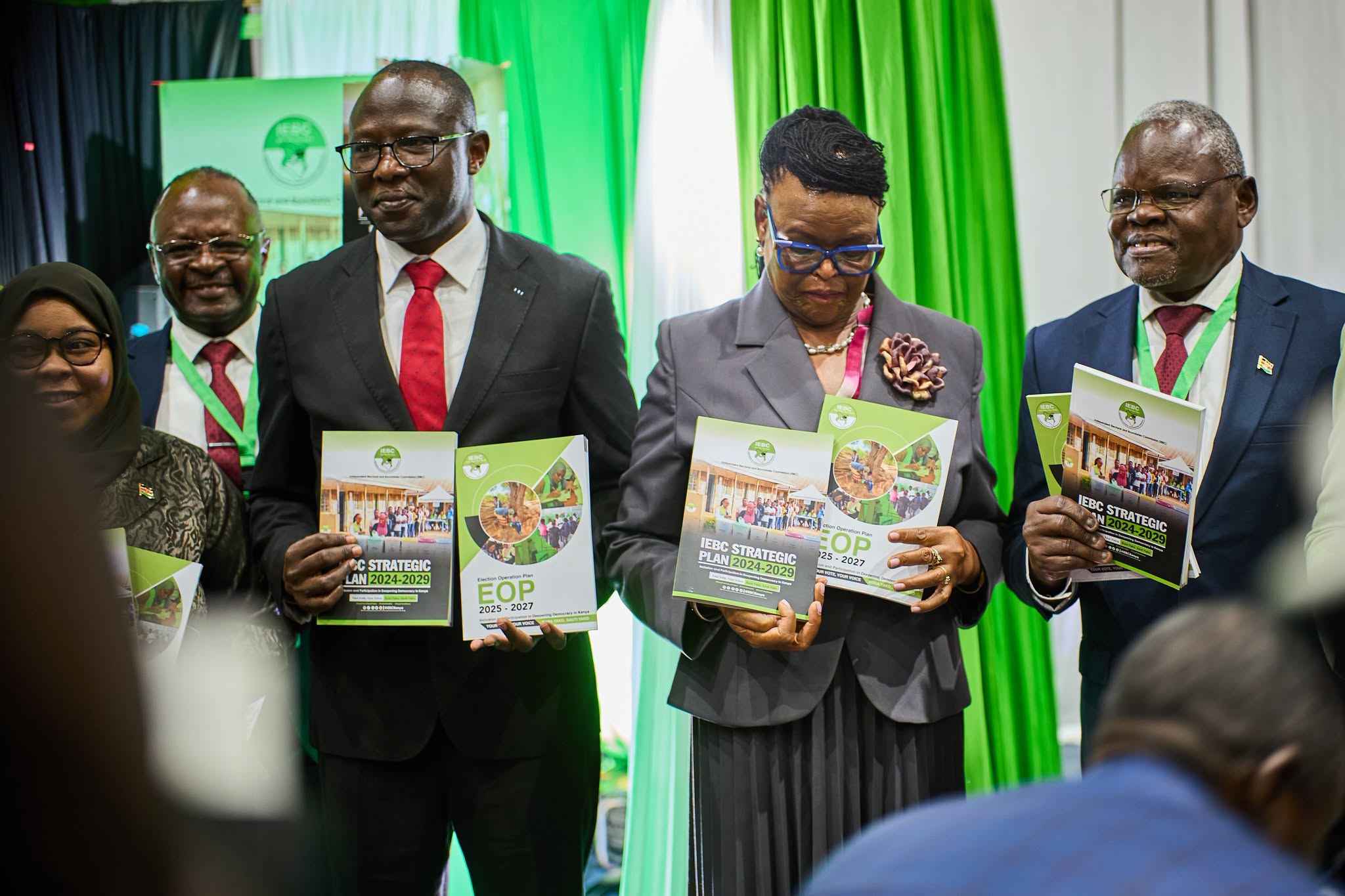
The IEBC has an Election Operations Plan covering 2025–2027, with activities relating to election technology audits, testing, certification, ICT security and results transmission infrastructure. This provides a framework against which Kenyans can monitor actual progress.
IEBC
The important question is whether the commission will deliver these milestones on time and make sufficient information available for independent scrutiny.
We should not wait until August 2027 to discover that something which could have been addressed in November 2026 was left unresolved.
6. What should Kenyans be demanding right now?
I believe the conversation needs to move beyond political personalities.
Whether you support the government, the opposition or neither, there are fundamental questions that deserve answers.
1. Can the IEBC provide an independently verifiable voters' register?
2. Is the election technology procurement and transition process transparent?
3. Will independent technical audits be conducted and their findings made public?
4. Are there clear procedures for verifying and transmitting presidential results?
5. Can political parties, civil society and ordinary citizens participate meaningfully in electoral oversight?
6. Is the commission adequately funded and operationally prepared?
These are not opposition questions or government questions.
They are Kenyan questions.
My take: The election begins long before election day.
Sometimes we become so consumed by political alliances, defections, presidential ambitions and campaign rallies that we forget the institution responsible for protecting our democratic choices.
We discuss who should occupy State House, but pay less attention to the systems that will determine who gets there.
We debate political candidates, but rarely discuss the technology that identifies voters and transmits their votes.
We demand accountability from elected leaders, but how much accountability do we demand from the institutions managing our elections?
The IEBC should not have to wait for politicians to question its preparedness before demonstrating that it is ready.
Likewise, political leaders should not treat electoral reforms as bargaining tools to be activated only when elections approach.
The 2027 General Election should be about the freedom of Kenyans to choose their leaders without intimidation, manipulation or uncertainty about whether their votes will count.
I do not think the biggest question should be whether the government or opposition wins the current disagreement.
The bigger question is whether, when August 2027 arrives, the losing candidate and their supporters will have sufficient confidence in the process to accept the outcome.
That confidence cannot be manufactured on election day. It must be built through transparency, preparation and accountability today.
Because democracy is not just about winning an election. It is about trusting the process that produces the winner.