As Kenya approaches the 2027 General Election, the debate over live-streaming election results and access to presidential election servers raises a fundamental question: Can Kenyans trust an electoral process they cannot independently verify?
Kenya's electoral process is once again at the centre of public debate following reports that lawmakers are seeking to remove provisions requiring the Independent Electoral and Boundaries Commission (IEBC) to guarantee live-streaming and access to technology used in presidential elections.
Although the details and final status of the proposed changes require careful verification, the debate goes beyond technology. It touches on public trust, accountability, constitutional rights and the credibility of the 2027 General Election.
For the ordinary Kenyan, the question is straightforward: If elections determine who governs the country, should citizens not have confidence that their votes are counted accurately and transparently?
What Does This Mean for the Ordinary Mwananchi?
Live-streaming election results and providing access to election technology are two distinct issues, but both relate to transparency.
Live-streaming can allow citizens, political parties, journalists and election observers to follow aspects of the results transmission and announcement process in real time. Access to election servers and related technology raises a more technical question: who can examine the systems used to transmit, store, process and verify election data, and under what safeguards?
These measures do not automatically guarantee a free and fair election. Live-streaming cannot, by itself, prove that every vote was counted correctly, while unrestricted access to election servers could create cybersecurity and data-protection risks.
However, independently verifiable election records, transparent procedures and properly supervised technical audits can help identify irregularities and build public confidence.
If safeguards are weakened without credible alternatives, Kenyans may question whether the electoral process is sufficiently open to scrutiny. Even where an election is conducted correctly, a lack of transparency can damage public confidence in its outcome.
That is why the details of any proposed legal changes matter. Kenyans deserve to know what is being removed, why it is being removed and what safeguards will remain in place.
June 25: A Reminder of What Happens When Public Trust Breaks Down
To understand why this debate matters, we must revisit 25 June 2024.
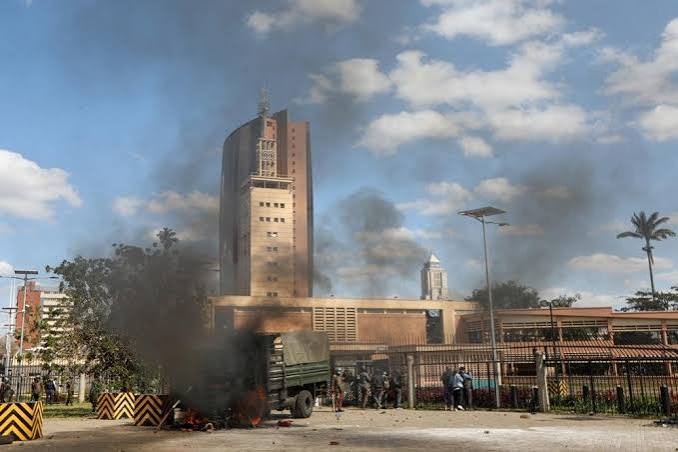
On that day, protests against the Finance Bill 2024 intensified across Kenya. Thousands of young people and other citizens took to the streets to oppose proposed tax measures and express wider frustrations over the cost of living, government accountability and the country's economic direction.
Demonstrations escalated in Nairobi, where protesters breached Parliament's perimeter and parts of the parliamentary complex were set on fire. Security forces responded, and the protests were accompanied by deaths, injuries and allegations of excessive use of force.
The events exposed a deep divide between sections of the public and the political leadership. For many protesters, the issue was no longer limited to taxation. It had become a question of whether leaders were listening to the people they were elected to represent.
President William Ruto subsequently announced that he would not sign the Finance Bill 2024 into law.
The significance of 25 June extends beyond the fate of a single Bill. It demonstrated how quickly public frustration can grow when citizens feel that important decisions are being made without sufficient accountability, consultation or responsiveness.
The protests did not arise from election technology, and the two issues should not be treated as identical. However, they share a crucial underlying concern: public trust in the institutions that exercise power on behalf of Kenyans.
When people doubt whether their voices matter, whether through public participation in legislation or the verification of their votes, confidence in government institutions can weaken.
Are We Learning From the Past or Repeating the Same Mistakes?
The debate over election technology presents an opportunity for Parliament, the IEBC and other stakeholders to demonstrate that the lessons of June 2024 have been taken seriously.
In a democracy, institutions must do more than claim that they are acting correctly. They must also establish credible ways for the public to understand, scrutinise and verify their actions.
If Parliament supports changes to electoral safeguards, it should explain the reasons publicly. Are the proposed changes intended to address cybersecurity vulnerabilities, clarify the IEBC's responsibilities, reduce operational challenges or achieve another objective?
These are legitimate questions. Protecting electoral systems against hacking, manipulation and unauthorised access is essential. Transparency should not mean exposing sensitive credentials or compromising the integrity of election infrastructure.
However, cybersecurity and transparency do not have to be opposing goals. Independent technical audits, clear access protocols, verifiable results records, public reporting and appropriate oversight can help protect systems while allowing meaningful scrutiny.
The challenge is to establish safeguards that protect both the security of the election and the public's right to have confidence in its outcome.
The government, Parliament and the IEBC must therefore explain not only what changes are proposed, but also how those changes will protect the integrity of the electoral process.
The 2027 Elections: More Than a Contest for Political Power
As Kenya moves towards the 2027 General Election, electoral transparency should not be reduced to a contest between political parties or personalities.
The consequences of an election extend into the everyday lives of citizens. The leaders elected in 2027 will make decisions affecting taxation, employment, education, healthcare, water access, environmental management and public spending.
For young Kenyans concerned about unemployment and economic opportunities, electoral credibility matters because elections provide a constitutional means of choosing and holding leaders accountable.
For communities demanding better roads, reliable water supplies and improved public services, the legitimacy of elected leadership matters because public institutions must remain answerable to the people they serve.
This is why election transparency should concern every eligible voter, regardless of political affiliation.
Citizens should not have to support a particular candidate to demand credible elections. Nor should they have to wait until a disputed election to ask whether the systems used to count and transmit votes can be independently verified.
Trust is easier to build before an election than to restore after a disputed result.
What Should Kenyans Be Asking Parliament and the IEBC?
As the debate continues, citizens have a legitimate interest in asking several questions:
- What specific legal provisions are lawmakers proposing to remove or amend?
- What evidence supports the proposed changes?
- How will the IEBC demonstrate that presidential election results are accurate and verifiable?
- What independent oversight will be available to political parties, accredited observers and qualified technical experts?
- How will the electoral system protect sensitive information without preventing legitimate scrutiny?
- Will the public have an opportunity to participate in the legislative process before changes are finalised?
These questions do not presume that the proposed changes are necessarily intended to manipulate an election. They recognise that electoral safeguards must be assessed on their merits and that decisions affecting democratic accountability require clear explanations.
Parliament has a responsibility to legislate in the public interest. The IEBC has a responsibility to conduct elections in accordance with the Constitution and the law. Citizens have a responsibility to remain informed, question public decisions and participate peacefully in democratic processes.
Conclusion: Transparency Is Not a Threat to Democracy
The events of 25 June 2024 remain a powerful reminder that public confidence cannot be taken for granted. Citizens expect their concerns to be heard, their rights to be respected and public institutions to operate transparently.
As the country prepares for 2027, the debate over live-streaming and access to presidential election technology should be handled with openness, evidence and public accountability.
There may be legitimate reasons to review how election technology is regulated. But any changes must strengthen, rather than undermine, the public's ability to trust the electoral process.
Kenya does not need to wait for another national crisis to learn the value of listening to its citizens.
Because when citizens lose confidence in democratic institutions, the damage extends far beyond election day. Rebuilding that confidence requires more than assurances from leaders. It requires transparent processes, accountable institutions and safeguards that Kenyans can independently verify.