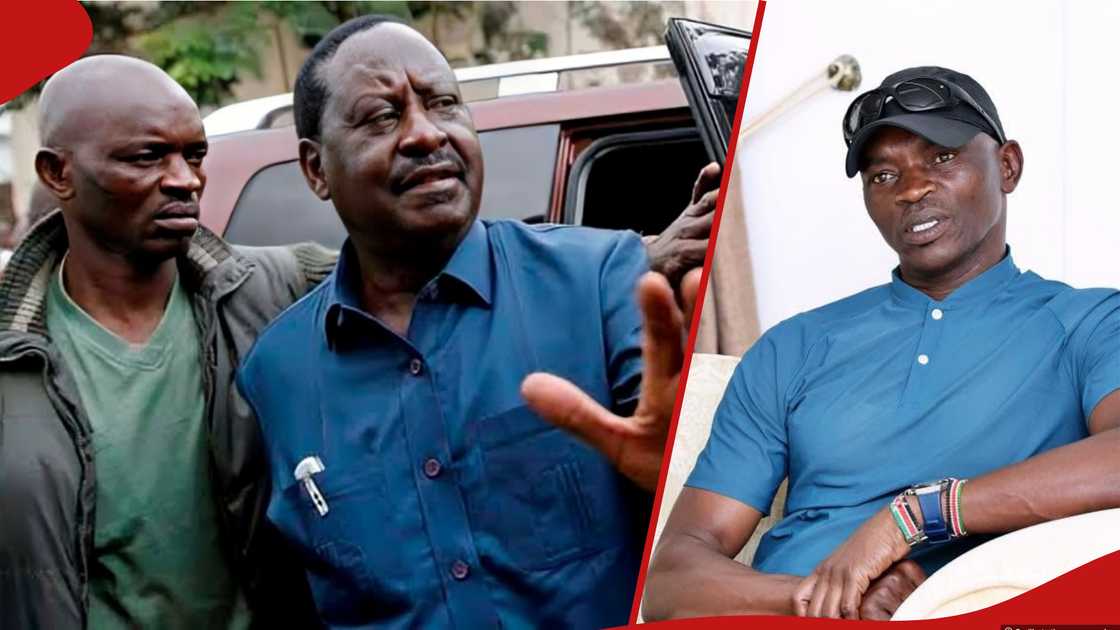
The death of former Prime Minister Raila Amolo Odinga in India on October 15, 2025, continues to attract public attention. Nearly a year later, revelations from his longtime bodyguard and confidant, Maurice Ogeta, have reignited debate about the dangers Raila faced during his political career and the circumstances surrounding his final days.
But a crucial question remains: Are these revelations evidence of foul play in Baba’s death, or are they accounts of earlier threats that have now resurfaced?
What has Maurice Ogeta revealed?
In interviews published in October 2026, Ogeta recounted frightening incidents from his years protecting Raila, including a 2023 confrontation during anti-government demonstrations in Nairobi. He described an incident in which gunshots were fired at Raila’s vehicle and the security team feared for their lives.
These accounts are serious, particularly because Ogeta was close to Raila and witnessed events that many Kenyans saw only through news reports and videos.
However, there is an important distinction between recounting an alleged assassination attempt during Raila’s political career and providing evidence that his death in India was caused by deliberate actions. The two claims should not be treated as interchangeable.
According to accounts published after Raila’s death, Ogeta said he was with him during his final morning walk in India. He recalled that Raila stopped walking, appeared unwell and subsequently lost control of his body. The reported medical explanation was cardiac arrest.
As of the reporting reviewed for this article, Ogeta’s accounts of earlier threats do not, on their own, establish that foul play caused Raila’s death.
Why are these revelations coming out now?
This is perhaps the most important question for Kenyans.
Ogeta served Raila for decades. His access to the former Prime Minister means his recollections can provide valuable insight into Raila’s security experiences. Yet the timing of his public statements, nearly a year after Raila’s death, naturally raises questions.
There are several possible explanations, but none should be presented as fact without evidence.
- A personal decision to speak: Ogeta may now feel ready to share painful memories from years of protecting someone he considered family.
- Renewed public interest: As the anniversary of Raila’s death approaches, Kenyans are revisiting his life, political struggles and final days.
- Unanswered public questions: Confusion surrounding old videos and competing accounts of Raila’s final moments has kept the subject alive. In June 2026, the Directorate of Criminal Investigations dismissed a viral claim that an Indian doctor had been paid to poison Raila, describing the claim as fake news.
These are possible explanations for the timing, not established motives on Ogeta’s part. His interviews do not, by themselves, establish that he has uncovered new evidence about the cause of death.
Should Kenyans believe there was foul play?
The responsible answer is that the allegations of earlier threats deserve scrutiny, but they are not proof that Raila was murdered.
Raila was a major political figure who experienced intense political confrontations throughout his career. Ogeta’s account of the 2023 incident raises questions about the use of force against Raila’s convoy and the security risks he faced at the time. Those events should be assessed on their own evidence.
His death in India is a separate matter. The reported medical explanation was cardiac arrest, and reporting at the time described underlying health conditions that increased his risk of serious cardiac complications.
If credible new evidence emerges that contradicts the established account, the appropriate response would be an independent, evidence-based investigation. That would require verifiable medical records, forensic evidence, witness testimony and a clear examination of the events surrounding his death, not speculation based on his political history alone.
The bigger question: Will Kenyans ever get all the answers?
Raila Odinga was more than a former Prime Minister. To millions of Kenyans, he was Baba, a political figure whose influence shaped the country's history for decades. His death therefore carries emotional and political significance that extends beyond his family.
When someone who stood close to such a figure recounts alleged assassination attempts, the public naturally wants to understand what happened. But the gravity of the allegations makes accuracy even more important.
If Ogeta possesses evidence that has not previously been made public, Kenyans deserve to know what it establishes and whether it has been presented to the relevant authorities. If he is recounting earlier experiences, those experiences should be documented and investigated where appropriate without automatically linking them to Raila’s death.
The public also has a responsibility to distinguish between a witness’s recollection, an allegation and a verified finding.
Ultimately, the question is not simply why Ogeta is speaking now. It is whether his revelations provide new, verifiable evidence that can answer outstanding questions.
Until such evidence is established, the claim that Raila Odinga’s death involved foul play remains unproven.
But a crucial question remains: Are these revelations evidence of foul play in Baba’s death, or are they accounts of earlier threats that have now resurfaced?
What has Maurice Ogeta revealed?
In interviews published in October 2026, Ogeta recounted frightening incidents from his years protecting Raila, including a 2023 confrontation during anti-government demonstrations in Nairobi. He described an incident in which gunshots were fired at Raila’s vehicle and the security team feared for their lives.
These accounts are serious, particularly because Ogeta was close to Raila and witnessed events that many Kenyans saw only through news reports and videos.
However, there is an important distinction between recounting an alleged assassination attempt during Raila’s political career and providing evidence that his death in India was caused by deliberate actions. The two claims should not be treated as interchangeable.
According to accounts published after Raila’s death, Ogeta said he was with him during his final morning walk in India. He recalled that Raila stopped walking, appeared unwell and subsequently lost control of his body. The reported medical explanation was cardiac arrest.
As of the reporting reviewed for this article, Ogeta’s accounts of earlier threats do not, on their own, establish that foul play caused Raila’s death.
Why are these revelations coming out now?
This is perhaps the most important question for Kenyans.
Ogeta served Raila for decades. His access to the former Prime Minister means his recollections can provide valuable insight into Raila’s security experiences. Yet the timing of his public statements, nearly a year after Raila’s death, naturally raises questions.
There are several possible explanations, but none should be presented as fact without evidence.
- A personal decision to speak: Ogeta may now feel ready to share painful memories from years of protecting someone he considered family.
- Renewed public interest: As the anniversary of Raila’s death approaches, Kenyans are revisiting his life, political struggles and final days.
- Unanswered public questions: Confusion surrounding old videos and competing accounts of Raila’s final moments has kept the subject alive. In June 2026, the Directorate of Criminal Investigations dismissed a viral claim that an Indian doctor had been paid to poison Raila, describing the claim as fake news.
These are possible explanations for the timing, not established motives on Ogeta’s part. His interviews do not, by themselves, establish that he has uncovered new evidence about the cause of death.
Should Kenyans believe there was foul play?
The responsible answer is that the allegations of earlier threats deserve scrutiny, but they are not proof that Raila was murdered.
Raila was a major political figure who experienced intense political confrontations throughout his career. Ogeta’s account of the 2023 incident raises questions about the use of force against Raila’s convoy and the security risks he faced at the time. Those events should be assessed on their own evidence.
His death in India is a separate matter. The reported medical explanation was cardiac arrest, and reporting at the time described underlying health conditions that increased his risk of serious cardiac complications.
If credible new evidence emerges that contradicts the established account, the appropriate response would be an independent, evidence-based investigation. That would require verifiable medical records, forensic evidence, witness testimony and a clear examination of the events surrounding his death, not speculation based on his political history alone.
The bigger question: Will Kenyans ever get all the answers?
Raila Odinga was more than a former Prime Minister. To millions of Kenyans, he was Baba, a political figure whose influence shaped the country's history for decades. His death therefore carries emotional and political significance that extends beyond his family.
When someone who stood close to such a figure recounts alleged assassination attempts, the public naturally wants to understand what happened. But the gravity of the allegations makes accuracy even more important.
If Ogeta possesses evidence that has not previously been made public, Kenyans deserve to know what it establishes and whether it has been presented to the relevant authorities. If he is recounting earlier experiences, those experiences should be documented and investigated where appropriate without automatically linking them to Raila’s death.
The public also has a responsibility to distinguish between a witness’s recollection, an allegation and a verified finding.
Ultimately, the question is not simply why Ogeta is speaking now. It is whether his revelations provide new, verifiable evidence that can answer outstanding questions.
Until such evidence is established, the claim that Raila Odinga’s death involved foul play remains unproven.