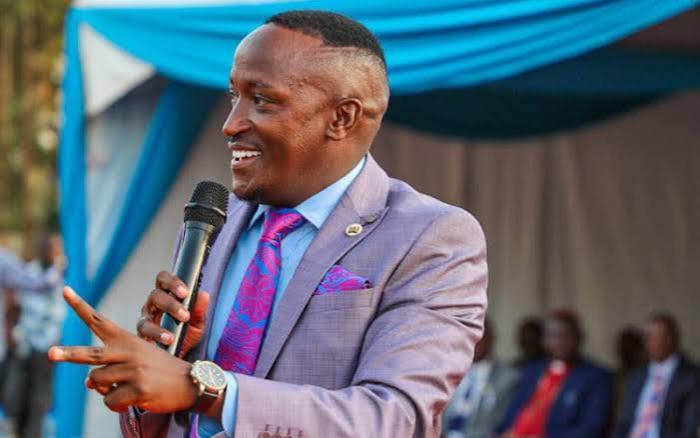
When Gatundu North MP Elijah Kururia reportedly said, “In politics, I can’t follow a man who is as poor as I am,” he raised a question that goes beyond personal wealth: Has Kenyan politics become a competition of financial muscle rather than leadership, ideas and public service?
There are statements that pass as ordinary political remarks and then there are those that force an entire society to stop and think. This is one of them.
The statement attributed to Gatundu North MP Elijah Kururia is controversial because it touches on something Kenyans have debated for years: the relationship between wealth, political influence and leadership.
At first glance, one might interpret the remark as a personal preference about the kind of political leaders one chooses to associate with. But look deeper, and it raises a much bigger question: Must someone be wealthy to deserve political followership?
Kenya has millions of citizens who work hard every day, struggle to pay bills, raise families and survive an increasingly expensive economy. Many of these citizens have leadership abilities, fresh ideas and a genuine understanding of the challenges facing their communities.
Does their financial position make them less qualified to lead?
The dangerous relationship between money and political loyalty
One of the biggest challenges facing Kenyan politics is the growing perception that money determines who gets heard, who gets followed and who gets political influence.
We have witnessed elections where financial muscle appears to dominate conversations that should be centered on manifestos, development records, accountability and the ability to solve people's problems.
Political mobilization is expensive. Campaigns require resources, transport, communication and networks. That is a reality. But there is a difference between acknowledging the importance of resources and suggesting that poverty should determine whether someone deserves political respect or followership.
If political leadership becomes a club reserved for the wealthy, what happens to young leaders, community organizers, professionals and ordinary citizens who have the ideas but lack the money?
Are we slowly creating a political culture where a person's bank balance matters more than their ability to represent people?
But is wealth really a measure of leadership?
Being wealthy does not automatically make someone a good leader. Equally, being poor does not automatically make someone a good leader.
A wealthy politician can have excellent ideas and a genuine commitment to public service. A financially struggling politician can also be visionary, accountable and capable of transforming a community.
The real question should be what a leader brings to the table.
- What ideas do they have?
- What problems can they solve?
- What is their record of accountability?
- How do they treat people who have nothing to offer them?
- Can they represent citizens whose financial circumstances are very different from theirs?
These are the questions that should determine political followership.
The Kenyan youth and the politics of financial muscle
Perhaps the most worrying implication of this conversation is what it means for young people entering politics.
Kenya has an entire generation of young people who are educated, innovative and eager to participate in leadership. However, many are unemployed, underemployed or struggling to establish themselves financially.
If wealth becomes an unofficial qualification for political leadership, we risk discouraging capable people before they even get an opportunity to participate.
Politics should provide room for people with ideas, not just people with money.
We should be discussing how technology, digital platforms, community mobilization and transparent resource mobilization can make political participation more accessible, rather than making financial status a measure of political relevance.
Perhaps we should ask a different question
I don't think the conversation should simply be about whether Elijah Kururia was right or wrong. We should examine the political culture that makes such a statement possible in the first place.
Is money becoming the currency of political loyalty in Kenya?
And if someone cannot follow a person who is as poor as they are, does that mean political leadership is ultimately about who has the financial capacity to sustain the journey rather than who has the vision to lead?
There is also an important distinction between choosing leaders who have the resources to organize politically and choosing leaders because of their wealth.
The two should never be confused.
Leadership should not be a poverty competition, but neither should it become a wealth competition.
A country needs leaders who understand both the struggles of ordinary citizens and the responsibilities that come with public office.
After all, the purpose of political leadership is not to find someone wealthier to follow. It is to find someone capable of representing the interests of the people.
Let's hear from Kenyans
Can someone who is financially struggling become a respected and influential political leader in Kenya, or has money become an unofficial requirement for political relevance?