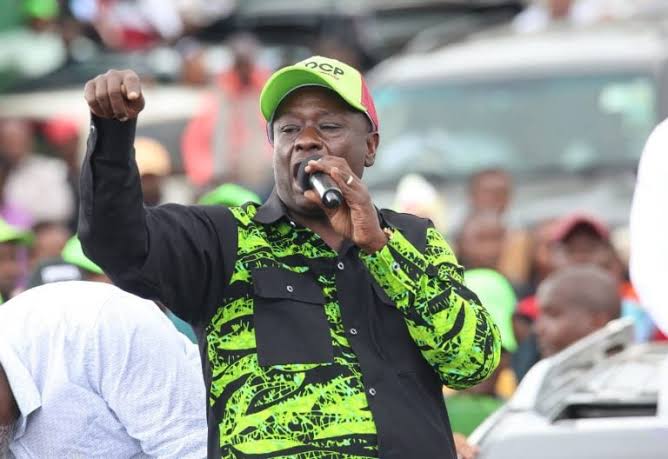
Former Deputy President Rigathi Gachagua has once again stirred Kenya’s political conversation with a statement that is difficult to ignore.
While responding to criticism from Kirinyaga Governor Anne Waiguru, Nakuru Governor Susan Kihika and Embu Governor Cecily Mbarire, Gachagua insisted that his problem was not with women but with what he calls political “traitors.”
Then came the controversial declaration:
“In fact, women traitors are worse than men traitors.”
Gachagua went further, arguing that women possess “some other powers” that can be used to betray the community. He maintained that he has tremendous respect for Kenyan women and insisted that his criticism should not be interpreted as an attack on women because of their gender.
But his words leave Kenya with a much bigger question:
Is a female traitor really worse than a male traitor?
The answer depends on what we mean by betrayal.
Betrayal has no gender
If a politician promises to defend the interests of a community and later acts against those interests, the betrayal is in the action not in whether the politician is male or female.
A dishonest politician is dishonest.
A corrupt politician is corrupt.
A politician who abandons their political principles is a political turncoat.
None of these behaviors has a biological sex.
That is why Gachagua's argument deserves scrutiny.
If a male leader supports a political arrangement that harms the interests of his community, why should his betrayal be considered less serious than that of a woman doing precisely the same thing?
The political consequences may be identical.
The difference, therefore, appears to be less about betrayal itself and more about how society perceives women who exercise political power.
But perhaps Gachagua is talking about something else
There is another interpretation.
Gachagua may not actually be arguing that women are inherently more treacherous.
His broader argument appears to be that women leaders who, in his view, betray the interests of their community can be particularly influential because of the political, social and interpersonal networks available to them.
He has specifically pointed at Waiguru, Kihika and Mbarire, whom he accuses of aligning themselves with President William Ruto and assisting what he describes as the humiliation or persecution of Mt Kenya.
From that perspective, his argument is fundamentally about political influence.
But even then, the question remains:
Why should that influence make a woman's betrayal worse than a man's?
If anything, a politically powerful person should be judged by the consequences of their decisions, regardless of gender.
The Waiguru-Kihika-Mbarire question
The controversy cannot be separated from Kenya's evolving Mt Kenya political landscape.
Waiguru, Kihika and Mbarire are not ordinary political actors. They are three prominent women governors occupying strategically important positions.
Their political alignment has increasingly placed them on the opposite side of Gachagua's emerging political camp.
Gachagua's language of “traitors” therefore appears to be part of a much larger political struggle over who speaks for Mt Kenya and who gets to define the region's political interests ahead of 2027.
This is where the story becomes more interesting.
The question is not simply whether Gachagua dislikes three female governors.
The question is:
Who gets to decide who is a traitor?
Gachagua can call a leader a traitor.
Waiguru can reject that accusation.
Kihika can reject it.
Mbarire can reject it.
Ultimately, however, it is the electorate that decides whether a politician has betrayed them.
The danger of turning politics into community loyalty
Kenya has a long history of politicians invoking “the community” when making political arguments.
A leader can claim to be defending Kikuyu interests.
Another can claim to be defending Luo interests.
Another can speak for Kalenjin interests.
But communities are not single political individuals.
Millions of people within the same ethnic or regional community can have completely different political opinions.
One voter may believe working with President Ruto is beneficial.
Another may believe it is political betrayal.
Another may not care about either faction and may simply want better roads, water, healthcare, jobs, schools and security.
So when politicians use the word **“traitor,”** the public should ask:
Traitor according to whom?
And perhaps even more importantly:
What exactly was betrayed?
Was it a promise?
A policy?
A political agreement?
A community's economic interests?
Or simply another politician's expectation of loyalty?
These are very different things.
The irony of women in Kenyan politics
There is an additional layer to Gachagua's comments.
Kenyan women have spent decades fighting to prove that they belong in political spaces historically dominated by men.
Women governors, MPs, senators and MCAs have had to fight against stereotypes that they are too emotional, too weak, too inexperienced or too dependent on male political structures.
And yet women such as Waiguru, Kihika and Mbarire have demonstrated that women can occupy some of the most powerful elective positions in the country.
That makes the language surrounding their political disagreements particularly sensitive.
If a male politician betrays his political base, we generally call him a traitor.
If a woman does the same, why should we introduce a different standard?
If anything, Kenya should be moving toward a political culture where women are judged **equally**—not more harshly and not more leniently.
Gachagua's own words create an interesting contradiction
Gachagua has been explicit that he respects Kenyan women.
In his latest remarks, he said he has tremendous respect for women and pointed to female politicians within his own political camp as evidence that his criticism is not directed at women generally.
That distinction is important.
He is not saying:
“Women are traitors.”
He is saying:
“Women who betray what I consider the interests of my community deserve particularly harsh treatment.”
But that still leaves the controversial question of why their betrayal should be considered worse.
And that is where Gachagua's argument becomes difficult to defend logically.
Perhaps the real issue is power, not gender
There is a more interesting way to interpret his statement.
What if a “female traitor” is not worse than a male traitor?
What if a **powerful traitor** is worse than a powerless one?
A politician with millions of followers, access to government structures, influence over voters and the ability to shape public opinion can cause significantly more political damage than an ordinary politician with little influence.
That applies equally to men and women.
If Waiguru, Kihika or Mbarire have the political influence Gachagua suggests they possess, then perhaps what makes them dangerous in his eyes is not that they are women.
It is that they are **powerful political actors who disagree with him.**
That distinction matters.
And this is where voters should pay attention
The 2027 election is likely to produce a battle not only between political parties but between competing interpretations of loyalty.
Who stood with the community?
Who betrayed it?
Who protected the region's interests?
Who sacrificed those interests for political survival?
These questions will be asked repeatedly.
But voters should be careful.
A politician calling another politician a traitor does not make the accusation true.
The electorate should demand evidence.
What did the politician promise?
What did they do?
Who benefited?
Who lost?
Was the decision in the public interest or merely in the politician's personal interest?
Those questions are far more useful than simply asking whether the accused politician is a man or a woman.
So, is a female traitor worse than a male traitor?
No not simply because she is a woman.
Betrayal should be measured by conduct, consequences and broken commitments, not gender.
A female politician can betray her supporters.
A male politician can betray his supporters.
A woman can stand courageously for her community.
A man can do exactly the same.
The real issue is not whether women have “other powers” that make them more dangerous traitors.
The real issue is what politicians do with the power they have.
And perhaps that is the question Gachagua's statement has accidentally placed before Kenya:
Should we judge political betrayal by the identity of the person who commits it—or by the damage their actions actually cause?
As Kenya moves toward 2027, voters may have to answer that question for themselves.
Because political loyalty is easy to demand.
Political accountability is much harder.
While responding to criticism from Kirinyaga Governor Anne Waiguru, Nakuru Governor Susan Kihika and Embu Governor Cecily Mbarire, Gachagua insisted that his problem was not with women but with what he calls political “traitors.”
Then came the controversial declaration:
“In fact, women traitors are worse than men traitors.”
Gachagua went further, arguing that women possess “some other powers” that can be used to betray the community. He maintained that he has tremendous respect for Kenyan women and insisted that his criticism should not be interpreted as an attack on women because of their gender.
But his words leave Kenya with a much bigger question:
Is a female traitor really worse than a male traitor?
The answer depends on what we mean by betrayal.
Betrayal has no gender
If a politician promises to defend the interests of a community and later acts against those interests, the betrayal is in the action not in whether the politician is male or female.
A dishonest politician is dishonest.
A corrupt politician is corrupt.
A politician who abandons their political principles is a political turncoat.
None of these behaviors has a biological sex.
That is why Gachagua's argument deserves scrutiny.
If a male leader supports a political arrangement that harms the interests of his community, why should his betrayal be considered less serious than that of a woman doing precisely the same thing?
The political consequences may be identical.
The difference, therefore, appears to be less about betrayal itself and more about how society perceives women who exercise political power.
But perhaps Gachagua is talking about something else
There is another interpretation.
Gachagua may not actually be arguing that women are inherently more treacherous.
His broader argument appears to be that women leaders who, in his view, betray the interests of their community can be particularly influential because of the political, social and interpersonal networks available to them.
He has specifically pointed at Waiguru, Kihika and Mbarire, whom he accuses of aligning themselves with President William Ruto and assisting what he describes as the humiliation or persecution of Mt Kenya.
From that perspective, his argument is fundamentally about political influence.
But even then, the question remains:
Why should that influence make a woman's betrayal worse than a man's?
If anything, a politically powerful person should be judged by the consequences of their decisions, regardless of gender.
The Waiguru-Kihika-Mbarire question
The controversy cannot be separated from Kenya's evolving Mt Kenya political landscape.
Waiguru, Kihika and Mbarire are not ordinary political actors. They are three prominent women governors occupying strategically important positions.
Their political alignment has increasingly placed them on the opposite side of Gachagua's emerging political camp.
Gachagua's language of “traitors” therefore appears to be part of a much larger political struggle over who speaks for Mt Kenya and who gets to define the region's political interests ahead of 2027.
This is where the story becomes more interesting.
The question is not simply whether Gachagua dislikes three female governors.
The question is:
Who gets to decide who is a traitor?
Gachagua can call a leader a traitor.
Waiguru can reject that accusation.
Kihika can reject it.
Mbarire can reject it.
Ultimately, however, it is the electorate that decides whether a politician has betrayed them.
The danger of turning politics into community loyalty
Kenya has a long history of politicians invoking “the community” when making political arguments.
A leader can claim to be defending Kikuyu interests.
Another can claim to be defending Luo interests.
Another can speak for Kalenjin interests.
But communities are not single political individuals.
Millions of people within the same ethnic or regional community can have completely different political opinions.
One voter may believe working with President Ruto is beneficial.
Another may believe it is political betrayal.
Another may not care about either faction and may simply want better roads, water, healthcare, jobs, schools and security.
So when politicians use the word **“traitor,”** the public should ask:
Traitor according to whom?
And perhaps even more importantly:
What exactly was betrayed?
Was it a promise?
A policy?
A political agreement?
A community's economic interests?
Or simply another politician's expectation of loyalty?
These are very different things.
The irony of women in Kenyan politics
There is an additional layer to Gachagua's comments.
Kenyan women have spent decades fighting to prove that they belong in political spaces historically dominated by men.
Women governors, MPs, senators and MCAs have had to fight against stereotypes that they are too emotional, too weak, too inexperienced or too dependent on male political structures.
And yet women such as Waiguru, Kihika and Mbarire have demonstrated that women can occupy some of the most powerful elective positions in the country.
That makes the language surrounding their political disagreements particularly sensitive.
If a male politician betrays his political base, we generally call him a traitor.
If a woman does the same, why should we introduce a different standard?
If anything, Kenya should be moving toward a political culture where women are judged **equally**—not more harshly and not more leniently.
Gachagua's own words create an interesting contradiction
Gachagua has been explicit that he respects Kenyan women.
In his latest remarks, he said he has tremendous respect for women and pointed to female politicians within his own political camp as evidence that his criticism is not directed at women generally.
That distinction is important.
He is not saying:
“Women are traitors.”
He is saying:
“Women who betray what I consider the interests of my community deserve particularly harsh treatment.”
But that still leaves the controversial question of why their betrayal should be considered worse.
And that is where Gachagua's argument becomes difficult to defend logically.
Perhaps the real issue is power, not gender
There is a more interesting way to interpret his statement.
What if a “female traitor” is not worse than a male traitor?
What if a **powerful traitor** is worse than a powerless one?
A politician with millions of followers, access to government structures, influence over voters and the ability to shape public opinion can cause significantly more political damage than an ordinary politician with little influence.
That applies equally to men and women.
If Waiguru, Kihika or Mbarire have the political influence Gachagua suggests they possess, then perhaps what makes them dangerous in his eyes is not that they are women.
It is that they are **powerful political actors who disagree with him.**
That distinction matters.
And this is where voters should pay attention
The 2027 election is likely to produce a battle not only between political parties but between competing interpretations of loyalty.
Who stood with the community?
Who betrayed it?
Who protected the region's interests?
Who sacrificed those interests for political survival?
These questions will be asked repeatedly.
But voters should be careful.
A politician calling another politician a traitor does not make the accusation true.
The electorate should demand evidence.
What did the politician promise?
What did they do?
Who benefited?
Who lost?
Was the decision in the public interest or merely in the politician's personal interest?
Those questions are far more useful than simply asking whether the accused politician is a man or a woman.
So, is a female traitor worse than a male traitor?
No not simply because she is a woman.
Betrayal should be measured by conduct, consequences and broken commitments, not gender.
A female politician can betray her supporters.
A male politician can betray his supporters.
A woman can stand courageously for her community.
A man can do exactly the same.
The real issue is not whether women have “other powers” that make them more dangerous traitors.
The real issue is what politicians do with the power they have.
And perhaps that is the question Gachagua's statement has accidentally placed before Kenya:
Should we judge political betrayal by the identity of the person who commits it—or by the damage their actions actually cause?
As Kenya moves toward 2027, voters may have to answer that question for themselves.
Because political loyalty is easy to demand.
Political accountability is much harder.