A figure of KSh7.78 trillion is difficult to ignore.
That is the figure being circulated as Kenya’s domestic debt, raising fresh questions about how much more borrowing the country can sustain and, more importantly, whether Kenyans are getting enough value from the money being borrowed.
The bigger story, however, is not simply that Kenya owes money. It is what happens when borrowing becomes a regular way of financing government operations.
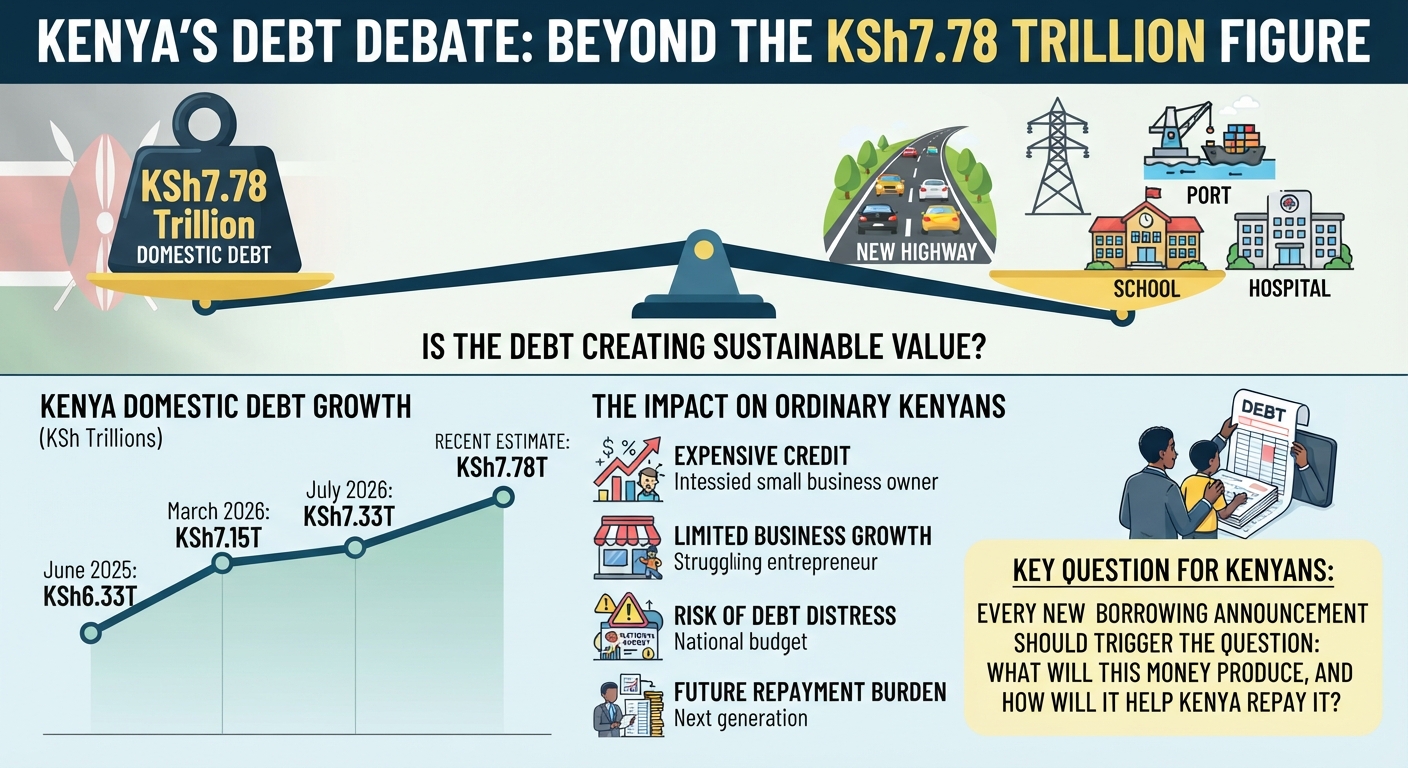
Official Treasury data shows that Kenya’s domestic debt has been climbing steadily. At the end of June 2025, domestic debt stood at about KSh6.33 trillion. By March 2026, it had risen to KSh7.15 trillion, while total public and publicly guaranteed debt stood at KSh12.83 trillion.
By early July 2026, Central Bank data put domestic debt at approximately KSh7.33 trillion, accounting for more than half of total public debt.
So while the KSh7.78 trillion figure in the circulating graphic may reflect a later debt position or a different measurement date, the underlying trend is clear: Kenya's domestic borrowing has been moving upward.
And Kenyans feel this debt differently
Government borrowing is not just a Treasury statistic.
Domestic debt is largely raised through Treasury bills and Treasury bonds. The government borrows from institutions and investors in Kenya, including commercial banks, pension funds and other financial institutions.
That means the consequences can eventually reach ordinary citizens.
When government borrowing absorbs a large share of available capital, questions arise about the amount of financing left for businesses, entrepreneurs and households.
A small business owner does not necessarily see a line saying "domestic debt increased."
They may instead see expensive credit, difficulty expanding a business, delayed payments or fewer economic opportunities.
But borrowing itself is not the enemy
This is where the conversation needs to become more serious.
Countries borrow. Kenya can borrow.
The problem is how much, at what cost, and for what purpose.
Borrowing to build infrastructure that improves productivity, expand reliable water systems, strengthen energy supply, improve transport or invest in productive sectors can potentially create future economic value.
But borrowing to continually cover recurrent expenditure creates a different problem.
The country eventually has to find money to repay both the principal and interest.
Kenya's own 2026 Medium-Term Debt Management Strategy acknowledges that the country remains at high risk of debt distress, even while its debt is assessed as sustainable under the government's framework. It also notes that the present value of public debt is expected to remain above the 55% benchmark until 2029.
The real question for Kenya
Every new borrowing announcement should therefore trigger a simple public question:
What will this money produce, and how will it help Kenya repay it?
Not every Shilling borrowed is necessarily bad.
But when debt keeps rising, Kenyans deserve to know whether the borrowed money is creating assets, jobs, businesses, infrastructure and economic growth or simply postponing today's financial problems to tomorrow.
Because eventually, debt is not paid by governments in isolation. It is paid through public revenues generated by the economy.
And public revenue ultimately comes from an economy made up of Kenyan workers, businesses and consumers.
The debt debate is therefore bigger than KSh7.78 trillion
It is about accountability.
It is about fiscal discipline.
It is about whether government spending is producing enough economic value.
And perhaps most importantly, it is about the Kenya we are leaving for the next generation.
Borrowing can build a country.
But uncontrolled borrowing can also quietly limit the choices of the country that comes after us.
The question is no longer simply: "How much does Kenya owe?"
The question is: "What did Kenya get in return?"
That is the figure being circulated as Kenya’s domestic debt, raising fresh questions about how much more borrowing the country can sustain and, more importantly, whether Kenyans are getting enough value from the money being borrowed.
The bigger story, however, is not simply that Kenya owes money. It is what happens when borrowing becomes a regular way of financing government operations.
Official Treasury data shows that Kenya’s domestic debt has been climbing steadily. At the end of June 2025, domestic debt stood at about KSh6.33 trillion. By March 2026, it had risen to KSh7.15 trillion, while total public and publicly guaranteed debt stood at KSh12.83 trillion.
By early July 2026, Central Bank data put domestic debt at approximately KSh7.33 trillion, accounting for more than half of total public debt.
So while the KSh7.78 trillion figure in the circulating graphic may reflect a later debt position or a different measurement date, the underlying trend is clear: Kenya's domestic borrowing has been moving upward.
And Kenyans feel this debt differently
Government borrowing is not just a Treasury statistic.
Domestic debt is largely raised through Treasury bills and Treasury bonds. The government borrows from institutions and investors in Kenya, including commercial banks, pension funds and other financial institutions.
That means the consequences can eventually reach ordinary citizens.
When government borrowing absorbs a large share of available capital, questions arise about the amount of financing left for businesses, entrepreneurs and households.
A small business owner does not necessarily see a line saying "domestic debt increased."
They may instead see expensive credit, difficulty expanding a business, delayed payments or fewer economic opportunities.
But borrowing itself is not the enemy
This is where the conversation needs to become more serious.
Countries borrow. Kenya can borrow.
The problem is how much, at what cost, and for what purpose.
Borrowing to build infrastructure that improves productivity, expand reliable water systems, strengthen energy supply, improve transport or invest in productive sectors can potentially create future economic value.
But borrowing to continually cover recurrent expenditure creates a different problem.
The country eventually has to find money to repay both the principal and interest.
Kenya's own 2026 Medium-Term Debt Management Strategy acknowledges that the country remains at high risk of debt distress, even while its debt is assessed as sustainable under the government's framework. It also notes that the present value of public debt is expected to remain above the 55% benchmark until 2029.
The real question for Kenya
Every new borrowing announcement should therefore trigger a simple public question:
What will this money produce, and how will it help Kenya repay it?
Not every Shilling borrowed is necessarily bad.
But when debt keeps rising, Kenyans deserve to know whether the borrowed money is creating assets, jobs, businesses, infrastructure and economic growth or simply postponing today's financial problems to tomorrow.
Because eventually, debt is not paid by governments in isolation. It is paid through public revenues generated by the economy.
And public revenue ultimately comes from an economy made up of Kenyan workers, businesses and consumers.
The debt debate is therefore bigger than KSh7.78 trillion
It is about accountability.
It is about fiscal discipline.
It is about whether government spending is producing enough economic value.
And perhaps most importantly, it is about the Kenya we are leaving for the next generation.
Borrowing can build a country.
But uncontrolled borrowing can also quietly limit the choices of the country that comes after us.
The question is no longer simply: "How much does Kenya owe?"
The question is: "What did Kenya get in return?"