For a young Kenyan receiving their first salary, getting a job is a major thing . But the excitement of earning a monthly income can quickly turn into stress when rent, transport, food, electricity, family responsibilities and tax deductions compete for the same money.
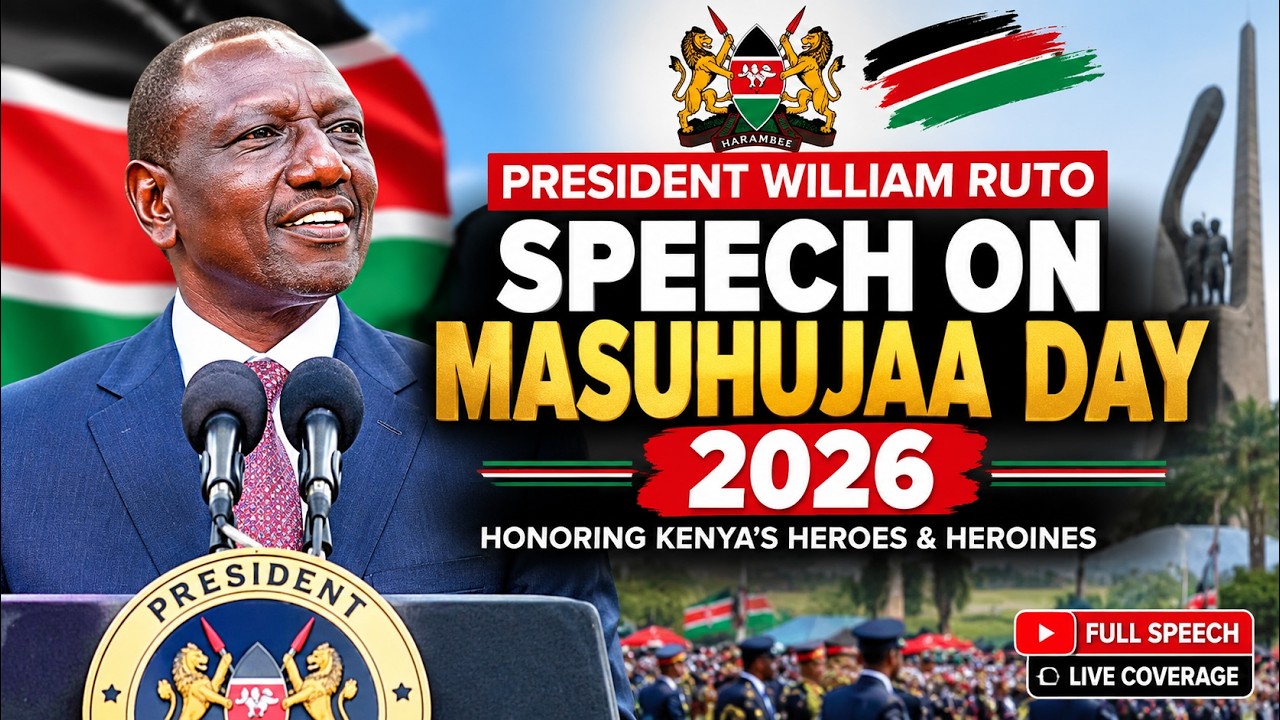
That is why President William Ruto’s reported announcement during the Mashujaa Day celebrations in Eldoret on 20 October 2026, proposing that workers earning less than KSh 32,000 be exempted from Pay As You Earn (PAYE), deserves serious financial analysis.
At first glance, the proposal appears straightforward: allow low-income workers to keep more of what they earn. Yet, from a public finance perspective, the important questions are how much workers will actually save, who will benefit, how the government will replace any lost revenue and whether the change will improve living standards over the long term.
The central issue is not simply whether workers should pay less tax. It is whether the policy will make working life more affordable without causing stress to the public services and economic opportunities those same workers depend on.
What exactly has the President proposed?
The President announced a proposal to exempt employees earning KSh 32,333 per month or less from PAYE. The National Treasury is expected to take the proposals through the necessary legislative process, meaning the announcement should not be mistaken for a tax change that is already active.
PAYE is income tax that employers deduct from employees’ employment earnings and remit to the Kenya Revenue Authority (KRA). Under the existing tax structure, resident employees receive personal relief of KSh 2,400 per month, which means many workers earning up to KSh 24,000 already have no PAYE liability after relief.
This distinction matters. The proposed exemption would not necessarily give every worker below KSh 32,333 an increase in take-home pay. Its most direct benefit would go to workers who currently pay PAYE, particularly those earning between approximately KSh 24,000 and KSh 32,333 per month.
The advantages: What could Kenya gain?
1. More disposable income for low-income workers
The most immediate benefit is straightforward: eligible employees could retain money that would otherwise be deducted as income tax.
Consider someone earning KSh 30,000 per month. Under the current tax bands, assuming the full salary is taxable and the standard personal relief applies, their PAYE would be approximately KSh 1,500 per month. If the proposed exemption were implemented as described, they could retain that amount.
That is KSh 18,000 over a year.
For a young worker who is paying rent, commuting to work and buying food, KSh 1,500 can make a meaningful difference. It might cover part of the monthly fare, contribute to electricity and water bills or help with groceries.
The amount may seem small when viewed from the perspective of a large government budget. For someone living on a modest salary, however, it can determine whether they finish the month with a little money left or have to borrow.
2. A better start for young people entering employment
The first job is often a period of financial adjustment. A graduate may have spent years studying, relied on family support and then entered employment expecting financial independence.
Reality can be different.
A new employee might receive an offer of KSh 28,000 or KSh 30,000, yet face transport costs, rent, food, professional clothing, internet bundles and requests for support from family members.
Removing PAYE for workers within the proposed income threshold could ease that transition. It would give young employees more room to establish themselves before taking on additional financial responsibilities.
There is also a potential economic benefit: workers with a little more disposable income may be better able to pay for professional courses, purchase work equipment, build emergency savings or start small businesses on the side.
These outcomes are not guaranteed, but the additional income creates the opportunity.
3. More spending in local businesses
Low-income workers tend to have immediate household needs. Additional money may therefore go towards food vendors, public transport, local shops, landlords, salons and other everyday services.
When more customers have money to spend, small businesses may experience an increase in sales. Those businesses can, in turn, use the revenue to replenish stock, pay workers or expand their operations.
This is the potential multiplier effect: a tax reduction for employees can support economic activity beyond the individual receiving the relief.
However, the size of that effect depends on how many workers benefit, how much they save, whether they spend locally and whether businesses respond by expanding production or simply increasing prices.
4. A fairer tax burden at the lower end of the income scale
A salary of KSh 30,000 does not necessarily represent financial comfort. The same income can support very different living situations depending on where someone lives, whether they have dependants, and whether they pay rent or receive family support.
A higher tax-free threshold recognises that a worker's ability to contribute to public revenue depends partly on what remains after meeting basic needs.
It could also make the tax system feel more responsive to workers who see their salaries consumed by essential expenses before they can build any financial security.
Nevertheless, a uniform income threshold cannot account for every household's circumstances. A single person earning KSh 30,000 and a parent earning the same amount to support three children face very different financial pressures.
The disadvantages: What could go wrong?
1. The government could collect less revenue
PAYE is one source of government revenue used to finance public expenditure. If more employees are exempted, the government will collect less income tax from the affected group than it would under the existing system.
That creates a fiscal question: where will the money come from?
The government could absorb the reduction, improve revenue collection elsewhere, reduce certain expenditures or borrow more. Each option has implications.
If the government cuts essential services, low-income households could lose some of the benefit through poorer healthcare, education, infrastructure or other public services. If it raises other taxes, some of the relief could be offset by higher costs on goods and services. If it borrows more, debt-service obligations could put pressure on future budgets.
None of these outcomes is automatic. The actual effect depends on how the Treasury finances the change and manages expenditure.
But a responsible tax policy should explain not only who receives relief, but also how the government will maintain essential services.
2. Workers earning slightly more may feel unfairly treated
Imagine two employees doing similar jobs.
One earns KSh 32,000 per month, while another earns KSh 33,000. If the first employee becomes fully exempt from PAYE but the second remains subject to the existing tax bands and reliefs, the difference in take-home pay may be smaller than the KSh 1,000 difference in their gross salaries suggests.
Still, the second employee may feel penalised for earning more.
This is a familiar challenge in tax design: a threshold can create a sharp distinction between people whose incomes are very close.
The precise effect will depend on the legislation's wording and how the new exemption interacts with the existing tax bands. Policymakers should ensure that the change does not create an unnecessarily abrupt transition or distort incentives to accept a pay rise.
3. It does not solve the cost-of-living problem
A tax reduction can improve take-home pay, but it cannot independently solve high rent, expensive transport, food inflation, unemployment or inadequate wages.
If a worker saves KSh 1,500 a month but their essential expenses increase by KSh 2,000, their financial position may still deteriorate.
There is also a risk that additional household spending could be partly absorbed by rising prices in markets where supply is constrained. That is not an inevitable consequence of the exemption, but it illustrates why tax relief works best alongside policies that support competition, productivity, affordable housing and reliable public transport.
Tax relief can help a worker manage the cost of living. It cannot, on its own, make the cost of living affordable.
4. Not everyone who needs help will benefit
The proposed measure targets salaried workers within a specified income range. But many Kenyans earn a living through informal work, small businesses, casual labour, farming and other forms of self-employment.
A young person who has been searching for work for a year will not receive a PAYE benefit because they have no salary from which PAYE is deducted. A small trader may be struggling with rent, stock costs and other taxes but receive no direct benefit from this particular measure.
That creates an important policy limitation: tax relief for employed people is not the same as economic relief for all low-income Kenyans.
To reach a wider population, the government would need complementary measures that support job creation, productive small businesses, vocational training and access to affordable credit.
What does the proposal mean for someone starting their first job?
Let us consider three young Kenyans who have just secured employment. The following estimates use the existing PAYE bands and monthly personal relief, assuming the entire salary is taxable and no other adjustments affect the calculation. They are illustrations, not official take-home-pay calculations.
Employee A · Monthly salary KSh 25,000
Estimated current PAYE
KSh 250
Potential tax saving: about KSh 250 monthly, or KSh 3,000 annually.
Employee B · Monthly salary KSh 30,000
Estimated current PAYE
KSh 1,500
Potential tax saving: about KSh 1,500 monthly, or KSh 18,000 annually.
Employee C · Monthly salary KSh 32,333
Estimated current PAYE
KSh 2,083
Potential tax saving: about KSh 2,083 monthly, or KSh 25,000 annually.
Calculations based on KRA's published individual tax bands and KSh 2,400 monthly personal relief.
The actual exemption and qualifying income will depend on the enacted rules.
These figures reveal an important point: the benefit is not necessarily the same for everyone below the proposed threshold. An employee earning KSh 20,000 already has no PAYE liability under the standard resident personal-relief arrangement. Someone earning KSh 25,000 would save considerably less than someone earning KSh 32,000.
And there is another important distinction: PAYE is only one component of a payslip. Employees may still have deductions for the Social Health Insurance Fund (SHIF), the Affordable Housing Levy, pension contributions and other applicable items. KRA's published PAYE guidance identifies several of these deductions and contributions separately.
Therefore, a PAYE exemption does not mean that a worker will receive their entire gross salary in their bank account.
A practical example: The graduate earning KSh 30,000
Imagine a graduate in Nairobi earning KSh 30,000 a month.
Their budget might look something like this:
Expense Illustrative monthly amount
Rent KSh 8,000
Transport KSh 4,000
Food KSh 6,000
Utilities and phone bundles KSh 2,000
Family support KSh 3,000
Personal and work expenses KSh 3,000
Total expenses KSh 26,000
This is an illustrative budget, not an estimate of average Kenyan household spending. It excludes some possible costs and assumes the listed amounts are paid from the employee's available income.
If the employee receives an additional KSh 1,500 monthly through the proposed PAYE exemption, that money could help cover unexpected transport costs, purchase work equipment, pay for a short professional course or begin an emergency fund.
Alternatively, if the employee has outstanding debt, the extra money could help reduce it.
But if the employee already spends more than their income, the relief may simply reduce the size of their monthly shortfall. The exemption would help, but it would not necessarily resolve the underlying financial problem.
For someone just starting work, this is why financial planning remains important even when tax policy improves.
How should a young worker use the extra money?
If the proposal becomes law and the employee's take-home pay increases, a sensible approach would be to give that additional money a purpose rather than allowing it to disappear into everyday spending.
For example, someone saving KSh 1,500 every month would accumulate KSh 18,000 over a year before interest. That could provide a modest emergency cushion or cover an important career expense.
A practical order of priorities would be:
1. Cover essential expenses. Make sure rent, food, transport and utilities are paid.
2. Build an emergency fund. Start small and work towards having enough to cover several months of essential expenses.
3. Reduce expensive debt. If you have high-interest loans, compare the cost of the debt with the value of other uses for the money.
4. Invest in your career. Consider training, professional certification, reliable internet access or equipment that improves your earning potential.
5. Increase savings gradually. Once immediate needs are covered, develop a consistent saving or investment habit suited to your circumstances.
The key is to treat a tax saving as an opportunity to strengthen your finances, not as guaranteed additional spending money.
What should the government do to make this policy effective?
For the proposal to deliver meaningful and lasting benefits, several issues deserve attention.
- Publish the fiscal impact. Kenyans should know how many workers are expected to benefit and how much revenue the Treasury anticipates losing.
- Explain the qualifying threshold clearly. The legislation should clarify whether the KSh 32,333 limit applies to gross salary, taxable employment income or another defined amount, and how benefits and other adjustments are treated.
- Protect essential services. The government should explain how it will manage the revenue reduction without placing undue pressure on services that low-income households rely on.
- Pair tax relief with job creation. Exempting a salary from PAYE cannot help a graduate who remains unemployed. More productive jobs, internships and pathways into formal employment are essential.
- Review the results. After implementation, the government should measure changes in take-home pay, household financial pressure, employment and revenue collection.
There is also a transparency issue. Reporting on the announcement noted that no projected number of beneficiaries or estimate of the revenue cost was provided at the time.
Those estimates would help Parliament and the public evaluate the proposal against its intended outcomes.
Conclusion: More money in the pocket, but is it enough?
The proposed PAYE exemption could provide real relief to Kenyan workers on modest salaries, particularly those earning between KSh 24,000 and KSh 32,333 who currently pay income tax. For a young person entering employment, even an additional KSh 1,000 to KSh 2,000 per month can make a difference to everyday budgeting, saving and professional development.
But a tax cut should not be confused with a complete solution to the cost-of-living challenge. The government must balance the immediate benefit to workers against the revenue required to fund public services, while addressing the broader problems of low wages, limited job opportunities and rising household expenses.
Ultimately, the success of this proposal should not be judged by the announcement alone. It should be judged by what happens after implementation: how much workers actually retain, whether their financial security improves, and whether the government can deliver that relief sustainably.
For the Kenyan starting their first job, the question is simple: will the salary finally stretch further? The proposal offers a possibility. Its actual impact will depend on the final law, the deductions that remain, the cost of living and whether the wider economy creates opportunities for that young worker to earn more in the years ahead.