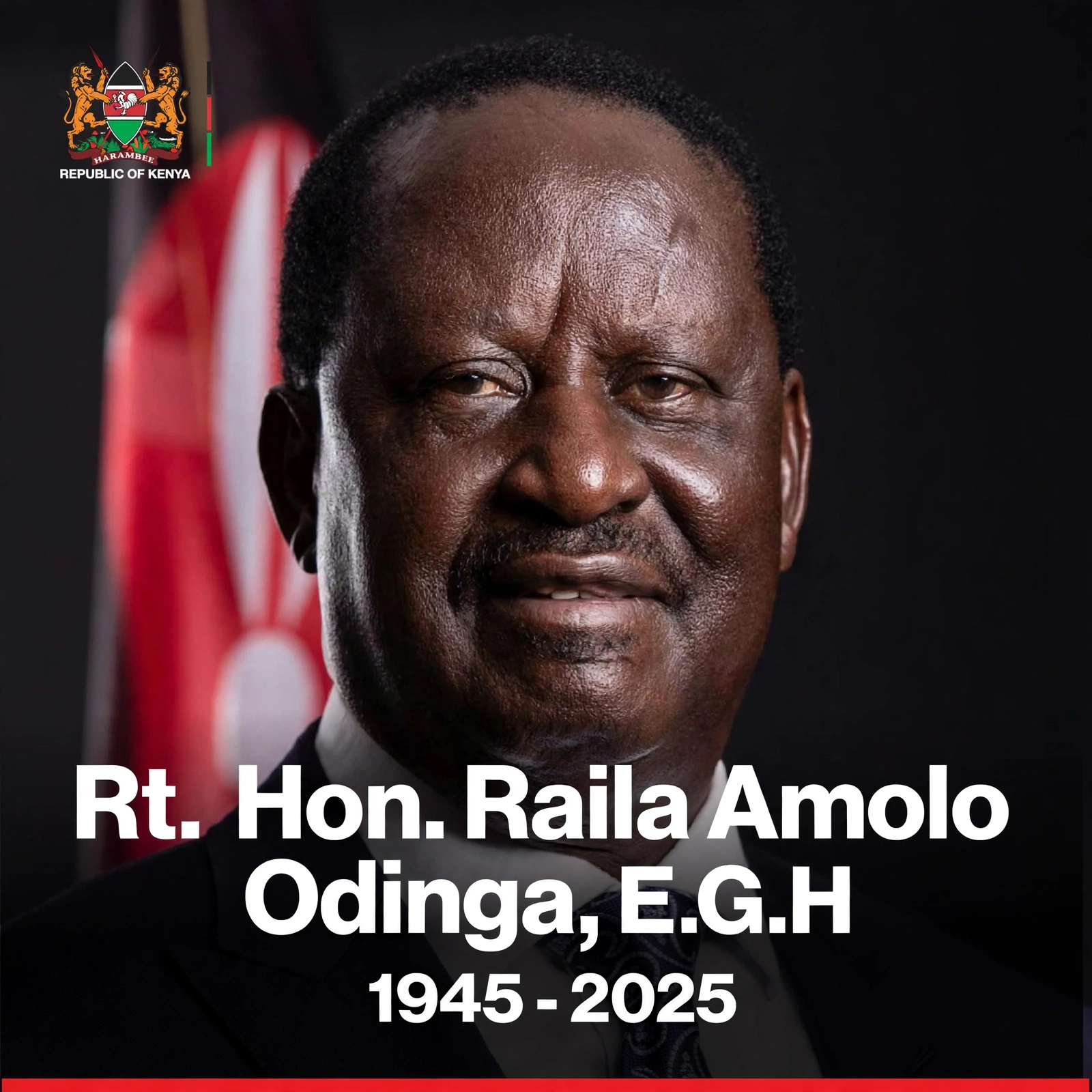
six o'clock on Friday evening, candles flickered from Uhuru Park to Mombasa's Treasury Square. Kenyans halted norms to remember the man, Baba. A year after Raila Odinga's death, the country is working out its losses
Odinga died from a suspected heart attack at a health clinic in southern India on October 15, 2025, having lived 80 years of victory and losses.
His send-off was turbulent. Days of memorial events left five people dead and hundreds injured in stampedes before he was buried at Bondo on October 19. His son and namesake, Raila Junior, said: “Now finally Baba is home.” He was laid to rest next to his father, Jaramogi Oginga Odinga.
At the time of his death, the enigma left a leadership vacuum in the opposition, with no obvious successor before the 2027 election. For nearly two decades, one man held ODM together. His authority calmed tempers, imposed direction, and kept the party focused.
His elder brother, Oburu Oginga, assumed the leadership in an acting capacity before being formally installed in March 2026. He faced questions about his legitimacy almost at once. At a parallel delegates' meeting in March, Nairobi Senator Edwin Sifuna said that no one had voted for the new leader.
Grief itself has become a political stage. A rift emerged between the ODM party and the family of its founder over the anniversary celebrations, with party leaders reportedly feeling sidelined. The result is two parallel programmes. ODM's October 2 candle-lighting opened its month-long “Mwezi was Baba”, while the family-backed steering committee scheduled an official international ceremony for October 14, led by his widow, Ida Odinga, at Bondo. The committee has acknowledged ODM's initiative and given it its blessing.
On Friday night, large crowds gathered at Uhuru Park, and Raila's story and legacy were projected onto the KICC tower. Supporters carried candles, flowers and portraits of their former leader.
The programme moves next to a rally in Kakamega on October 9, family-led activities from October 10 to 15, and a main memorial service at Bondo on the anniversary itself.
Whether the grief shown in these crowds becomes political unity or deepens the divisions is the question that will shape Kenya's road to 2027.
Odinga died from a suspected heart attack at a health clinic in southern India on October 15, 2025, having lived 80 years of victory and losses.
His send-off was turbulent. Days of memorial events left five people dead and hundreds injured in stampedes before he was buried at Bondo on October 19. His son and namesake, Raila Junior, said: “Now finally Baba is home.” He was laid to rest next to his father, Jaramogi Oginga Odinga.
At the time of his death, the enigma left a leadership vacuum in the opposition, with no obvious successor before the 2027 election. For nearly two decades, one man held ODM together. His authority calmed tempers, imposed direction, and kept the party focused.
His elder brother, Oburu Oginga, assumed the leadership in an acting capacity before being formally installed in March 2026. He faced questions about his legitimacy almost at once. At a parallel delegates' meeting in March, Nairobi Senator Edwin Sifuna said that no one had voted for the new leader.
Grief itself has become a political stage. A rift emerged between the ODM party and the family of its founder over the anniversary celebrations, with party leaders reportedly feeling sidelined. The result is two parallel programmes. ODM's October 2 candle-lighting opened its month-long “Mwezi was Baba”, while the family-backed steering committee scheduled an official international ceremony for October 14, led by his widow, Ida Odinga, at Bondo. The committee has acknowledged ODM's initiative and given it its blessing.
On Friday night, large crowds gathered at Uhuru Park, and Raila's story and legacy were projected onto the KICC tower. Supporters carried candles, flowers and portraits of their former leader.
The programme moves next to a rally in Kakamega on October 9, family-led activities from October 10 to 15, and a main memorial service at Bondo on the anniversary itself.
Whether the grief shown in these crowds becomes political unity or deepens the divisions is the question that will shape Kenya's road to 2027.