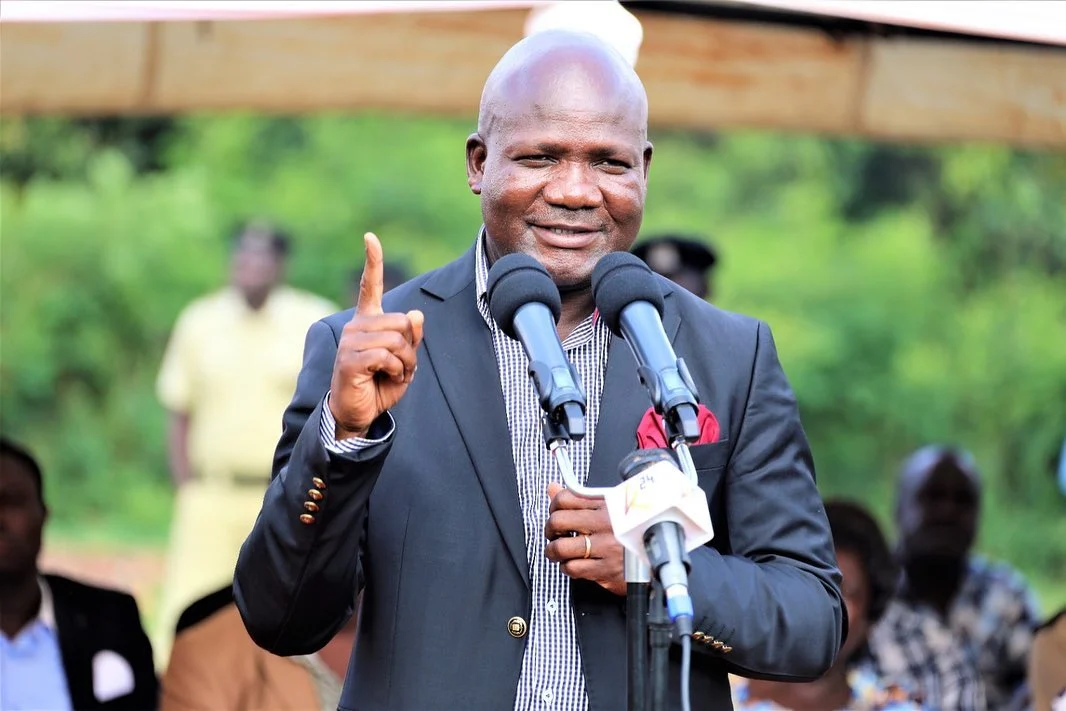
A video circulating online has once again put Kakamega Governor Fernandes Barasa at the centre of an uncomfortable conversation.
The footage appears to show a man resembling Barasa in the presence of a person described online as a traditional healer or witchdoctor. But there is an important distinction: the identity of the man, the purpose of the encounter and what was actually taking place cannot be independently established from the video alone. Recent reports have also stressed that the footage should not be treated as proof that Barasa was performing any ritual.
Yet the controversy is not entirely new.
In 2024, a man identified as William Simiyu Matere, alias Elijah, was charged in connection with an alleged KSh240 million extortion scheme involving threats to expose material allegedly connected to Barasa. Reports at the time linked the controversy to claims that Barasa had sought spiritual intervention ahead of the 2022 gubernatorial election. Those claims were allegations, not established facts.
Now, as Barasa positions himself for another term in 2027, the old controversy has resurfaced.
And that raises a much bigger question:
What are politicians willing to do for power?
Politics is not only about rallies, manifestos and development projects. In many societies, including Kenya, politics can also intersect with religion, traditional beliefs, spiritual practices and personal convictions.
Some politicians publicly seek prayers from pastors. Others consult traditional spiritual practitioners. Others may simply follow cultural practices that outsiders misunderstand.
But when images emerge from secretive or unexplained settings, the public naturally begins asking questions.
Is political power becoming something people are willing to pursue at any cost?
That question should not be directed at Barasa alone.
Kenyan politics has repeatedly produced stories of politicians seeking blessings, prophecies, spiritual protection or traditional interventions before major political contests. However, allegations about specific individuals should be investigated and verified rather than converted into facts simply because a photograph or video has gone viral.
The dangerous part is not belief. It is desperation for power.
A politician consulting a traditional healer, a pastor or any other spiritual figure is not, by itself, proof of wrongdoing.
The deeper issue is what happens when political ambition becomes so powerful that someone begins believing that the ordinary rules of competition are not enough.
Elections are supposed to be decided by citizens.
Votes should come from persuasion, performance, policies, organisation and public trust , not fear of supernatural forces.
And this is where the conversation becomes particularly important as Kenya approaches 2027.
Barasa has openly positioned himself for a second term, while his administration has highlighted development projects and service delivery as part of its record.
At the same time, political competition around Kakamega is already becoming intense.
So if a controversial video resurfaces, the public has every right to ask:
What exactly happened?
Who is the person in the video?
When and where was it recorded?
What was the purpose of the meeting?
And most importantly:
Was anything illegal actually taking place, or are Kenyans once again turning an unexplained image into a political story?
Those are questions for evidence, not speculation.
But perhaps the biggest question is bigger than Barasa.
Why does political leadership sometimes appear to demand so much from those pursuing it?
Money.
Friendships.
Loyalty.
Reputation.
Sacrifice.
And sometimes, according to allegations that periodically emerge in Kenyan politics, even spiritual compromises.
We should be careful here. There is no verified evidence from this footage establishing that Barasa used "satanic ways" to obtain his position. That would be an accusation, not a fact.
But the conversation about the perceived cost of power is worth having.
Because leadership should never become a competition where candidates feel they must surrender their principles, exploit fear or seek supernatural shortcuts to defeat their opponents.
Ultimately, the most important question for voters should remain much simpler:
What did the leader do with the power once they got it?
Not what happened inside a mysterious room.
Not what a viral video suggests.
Not what political opponents claim.
But what can be demonstrated through records, decisions, public resources, development, accountability and service to citizens.
Because if leadership has a price, Kenyans deserve to know who is paying it and, more importantly, who is ultimately bearing the cost.
The 2027 political season will test not only politicians seeking power, but also the public's ability to separate evidence from rumours, faith from manipulation, and political theatre from reality.
The footage appears to show a man resembling Barasa in the presence of a person described online as a traditional healer or witchdoctor. But there is an important distinction: the identity of the man, the purpose of the encounter and what was actually taking place cannot be independently established from the video alone. Recent reports have also stressed that the footage should not be treated as proof that Barasa was performing any ritual.
Yet the controversy is not entirely new.
In 2024, a man identified as William Simiyu Matere, alias Elijah, was charged in connection with an alleged KSh240 million extortion scheme involving threats to expose material allegedly connected to Barasa. Reports at the time linked the controversy to claims that Barasa had sought spiritual intervention ahead of the 2022 gubernatorial election. Those claims were allegations, not established facts.
Now, as Barasa positions himself for another term in 2027, the old controversy has resurfaced.
And that raises a much bigger question:
What are politicians willing to do for power?
Politics is not only about rallies, manifestos and development projects. In many societies, including Kenya, politics can also intersect with religion, traditional beliefs, spiritual practices and personal convictions.
Some politicians publicly seek prayers from pastors. Others consult traditional spiritual practitioners. Others may simply follow cultural practices that outsiders misunderstand.
But when images emerge from secretive or unexplained settings, the public naturally begins asking questions.
Is political power becoming something people are willing to pursue at any cost?
That question should not be directed at Barasa alone.
Kenyan politics has repeatedly produced stories of politicians seeking blessings, prophecies, spiritual protection or traditional interventions before major political contests. However, allegations about specific individuals should be investigated and verified rather than converted into facts simply because a photograph or video has gone viral.
The dangerous part is not belief. It is desperation for power.
A politician consulting a traditional healer, a pastor or any other spiritual figure is not, by itself, proof of wrongdoing.
The deeper issue is what happens when political ambition becomes so powerful that someone begins believing that the ordinary rules of competition are not enough.
Elections are supposed to be decided by citizens.
Votes should come from persuasion, performance, policies, organisation and public trust , not fear of supernatural forces.
And this is where the conversation becomes particularly important as Kenya approaches 2027.
Barasa has openly positioned himself for a second term, while his administration has highlighted development projects and service delivery as part of its record.
At the same time, political competition around Kakamega is already becoming intense.
So if a controversial video resurfaces, the public has every right to ask:
What exactly happened?
Who is the person in the video?
When and where was it recorded?
What was the purpose of the meeting?
And most importantly:
Was anything illegal actually taking place, or are Kenyans once again turning an unexplained image into a political story?
Those are questions for evidence, not speculation.
But perhaps the biggest question is bigger than Barasa.
Why does political leadership sometimes appear to demand so much from those pursuing it?
Money.
Friendships.
Loyalty.
Reputation.
Sacrifice.
And sometimes, according to allegations that periodically emerge in Kenyan politics, even spiritual compromises.
We should be careful here. There is no verified evidence from this footage establishing that Barasa used "satanic ways" to obtain his position. That would be an accusation, not a fact.
But the conversation about the perceived cost of power is worth having.
Because leadership should never become a competition where candidates feel they must surrender their principles, exploit fear or seek supernatural shortcuts to defeat their opponents.
Ultimately, the most important question for voters should remain much simpler:
What did the leader do with the power once they got it?
Not what happened inside a mysterious room.
Not what a viral video suggests.
Not what political opponents claim.
But what can be demonstrated through records, decisions, public resources, development, accountability and service to citizens.
Because if leadership has a price, Kenyans deserve to know who is paying it and, more importantly, who is ultimately bearing the cost.
The 2027 political season will test not only politicians seeking power, but also the public's ability to separate evidence from rumours, faith from manipulation, and political theatre from reality.