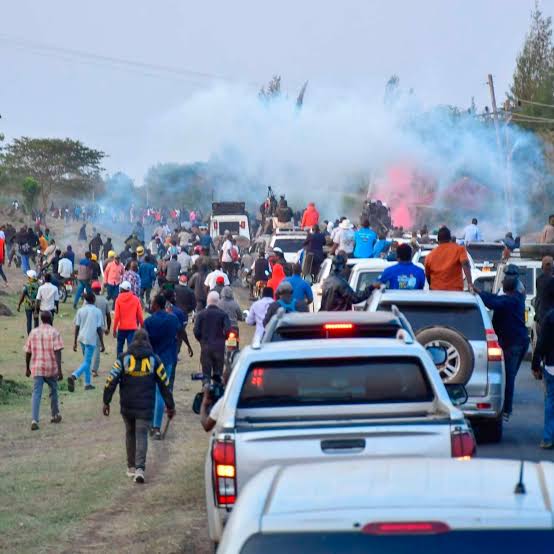



What was expected to be a political rally in Homa Bay turned into scenes of violence, destruction and fear on Sunday, August 16, as supporters and opponents around the Linda Mwananchi political tour clashed.
The aftermath has now shifted from the streets to the police stations, with the National Police Service reporting arrests in connection with the violence. Reports indicate that 37 people were arrested as police began a wider crackdown following the unrest.
But the numbers only tell part of the story.
A Rally That Turned Chaotic
The violence reportedly involved groups of youths armed with crude weapons, road blockades and attacks targeting people associated with the political gathering.
Journalists covering the event were among those assaulted, with reports of equipment being stolen or damaged. Amnesty International Kenya has called for prompt, independent and transparent investigations into the incidents.
Businesses and private property were also caught in the political crossfire.
Homa Bay Tourist Hotel was reportedly raided twice by armed youths allegedly searching for people associated with Linda Mwananchi. Windows were smashed, CCTV equipment destroyed and property reportedly stolen.
That raises an uncomfortable question:
When political competition destroys the property and livelihoods of ordinary citizens, who really wins?
Politics Should Not Become a License for Violence
Political rallies are a legitimate part of democracy. Supporters should be able to gather, politicians should be able to campaign and journalists should be able to report without intimidation.
Disagreement is normal in politics.
Violence is not.
The fact that police had already arrested people and seized five pangas before the rally demonstrates how serious the security concerns surrounding the event had become.
But arrests alone cannot solve the problem.
There must also be accountability for anyone who organized, financed, encouraged or participated in violence regardless of their political affiliation.
The Cost Goes Beyond Politics
For a politician, a disrupted rally may mean losing an afternoon of campaigning.
For a business owner whose hotel is vandalized, it could mean losing months of income.
For a journalist whose equipment is stolen, it could mean losing the tools through which they earn a living.
And for ordinary residents, political violence can create fear long after politicians have left town.
This is why political violence should never be dismissed as simply "politics."
It has an economic cost, a social cost and a democratic cost.
Homa Bay Should Not Become a Political Battleground
The events in Homa Bay should prompt serious reflection among political leaders and their supporters.
Kenya has a painful history of political violence. The country cannot afford to normalize scenes where rallies are blocked, journalists attacked, businesses vandalized and citizens threatened because of political differences.
The responsibility is shared.
Political leaders must restrain their supporters. Security agencies must protect citizens impartially. The media must be allowed to work freely. And citizens must reject the idea that political loyalty requires violence against another Kenyan.
The 2027 election is still ahead.
There will be many rallies.
There will be sharper political disagreements.
There will be competing visions for Kenya.
But democracy only works when people are free to disagree without destroying each other.
Homa Bay has already paid a price.
The question now is whether Kenya will learn from it or wait for the next rally to turn political competition into another confrontation.
Politics should be a battle of ideas, not a battle in the streets.
The aftermath has now shifted from the streets to the police stations, with the National Police Service reporting arrests in connection with the violence. Reports indicate that 37 people were arrested as police began a wider crackdown following the unrest.
But the numbers only tell part of the story.
A Rally That Turned Chaotic
The violence reportedly involved groups of youths armed with crude weapons, road blockades and attacks targeting people associated with the political gathering.
Journalists covering the event were among those assaulted, with reports of equipment being stolen or damaged. Amnesty International Kenya has called for prompt, independent and transparent investigations into the incidents.
Businesses and private property were also caught in the political crossfire.
Homa Bay Tourist Hotel was reportedly raided twice by armed youths allegedly searching for people associated with Linda Mwananchi. Windows were smashed, CCTV equipment destroyed and property reportedly stolen.
That raises an uncomfortable question:
When political competition destroys the property and livelihoods of ordinary citizens, who really wins?
Politics Should Not Become a License for Violence
Political rallies are a legitimate part of democracy. Supporters should be able to gather, politicians should be able to campaign and journalists should be able to report without intimidation.
Disagreement is normal in politics.
Violence is not.
The fact that police had already arrested people and seized five pangas before the rally demonstrates how serious the security concerns surrounding the event had become.
But arrests alone cannot solve the problem.
There must also be accountability for anyone who organized, financed, encouraged or participated in violence regardless of their political affiliation.
The Cost Goes Beyond Politics
For a politician, a disrupted rally may mean losing an afternoon of campaigning.
For a business owner whose hotel is vandalized, it could mean losing months of income.
For a journalist whose equipment is stolen, it could mean losing the tools through which they earn a living.
And for ordinary residents, political violence can create fear long after politicians have left town.
This is why political violence should never be dismissed as simply "politics."
It has an economic cost, a social cost and a democratic cost.
Homa Bay Should Not Become a Political Battleground
The events in Homa Bay should prompt serious reflection among political leaders and their supporters.
Kenya has a painful history of political violence. The country cannot afford to normalize scenes where rallies are blocked, journalists attacked, businesses vandalized and citizens threatened because of political differences.
The responsibility is shared.
Political leaders must restrain their supporters. Security agencies must protect citizens impartially. The media must be allowed to work freely. And citizens must reject the idea that political loyalty requires violence against another Kenyan.
The 2027 election is still ahead.
There will be many rallies.
There will be sharper political disagreements.
There will be competing visions for Kenya.
But democracy only works when people are free to disagree without destroying each other.
Homa Bay has already paid a price.
The question now is whether Kenya will learn from it or wait for the next rally to turn political competition into another confrontation.
Politics should be a battle of ideas, not a battle in the streets.