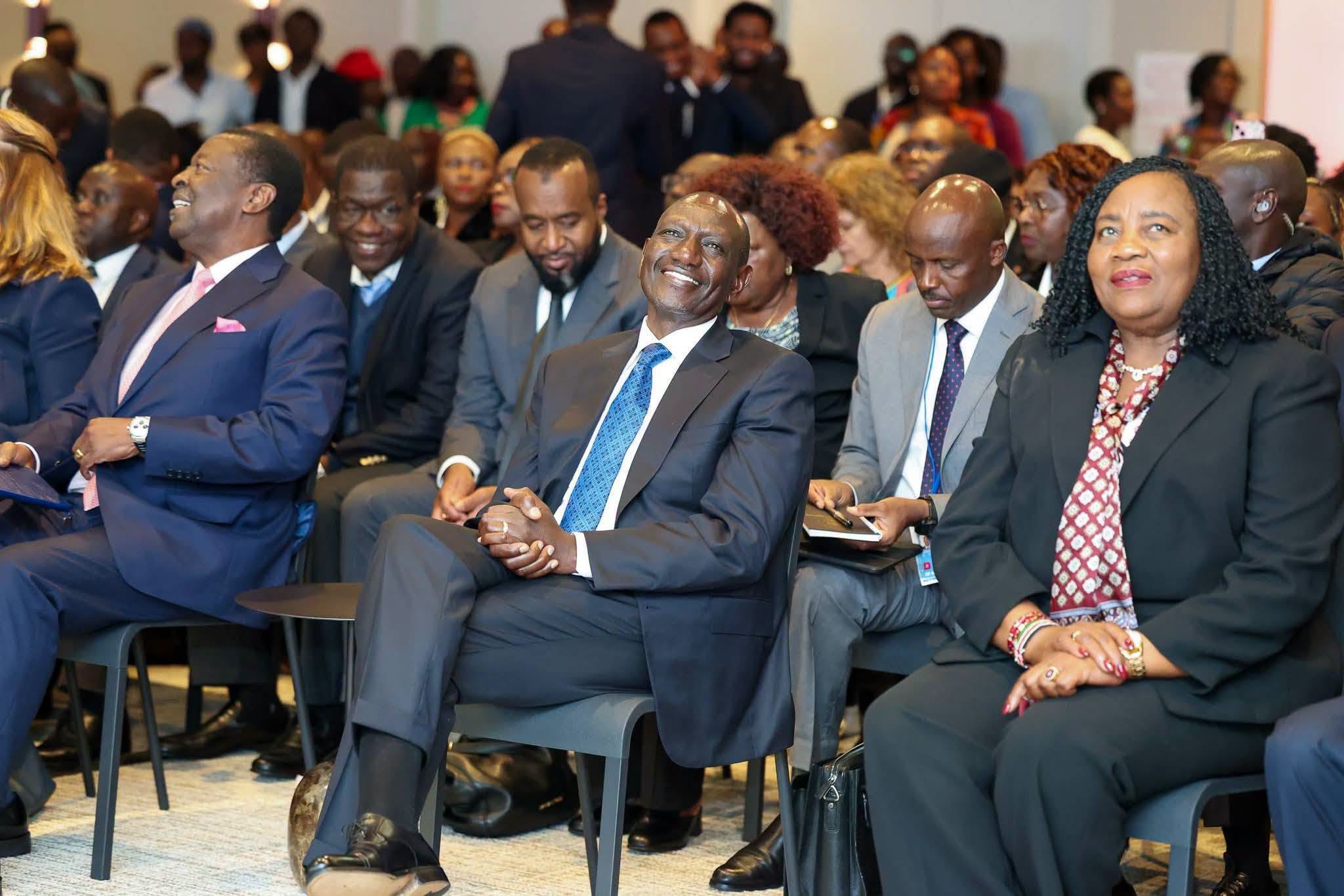
President William Ruto has arrived in New York for the 81st United Nations General Assembly (UNGA) with an agenda centered on investment, African financing, and technology.
The UNGA high-level week runs from September 22 to 28 under the theme “Restoring trust, managing transformation: A United Nations that delivers for all. For Kenya, however, Ruto's engagement is carrying a distinctly economic message.
The President is seeking partnerships in energy, infrastructure, manufacturing, health, agriculture and technology, with the stated objective of expanding productive capacity, opening markets and creating employment.
The Lamu refinery pitch
One of the most significant investment proposals associated with Ruto's visit is the planned East Africa Refinery in Lamu, estimated at KSh2.2 trillion ($17 billion).
The project is being presented to potential investors through engagements involving the Africa Finance Corporation and the Global Africa Business Initiative, with Nigerian industrialist Aliko Dangote among the prominent figures involved in the investment discussions.
According to government projections, the proposed refinery would have a capacity of 700,000 barrels of crude oil per day and could create more than 60,000 jobs. Groundbreaking is scheduled for September 30, 2026.
These figures, however, describe a planned project and its projected economic benefits. They should not be interpreted as existing production capacity or jobs already created.
The distinction is important as Kenya seeks to convert major investment proposals into actual projects.
Financing Africa's development
Ruto's economic message extends beyond individual projects.
He is also promoting an Africa-financing-Africa approach, arguing that African countries should mobilize more of their own capital to finance infrastructure and enterprise while continuing to attract international investment.
Kenya is highlighting a proposed National Infrastructure Fund, which the government says could mobilize up to $40 billion without adding to public debt.
Again, the figure represents a target for capital mobilization, not $40 billion already secured.
The broader argument is that Africa has significant financial resources but needs stronger mechanisms to channel that capital into productive investments. Whether the approach delivers will depend on factors such as project viability, investor confidence, institutional capacity and the terms on which the financing is raised.
AI enters the investment agenda.
Technology, particularly artificial intelligence, is another major component of Kenya's UNGA agenda.
Ruto and Finnish President Alexander Stubb are expected to co-lead the AI Middle Powers Initiative, while Kenya is also supporting the African Development Bank-backed AI $10 Billion Initiative, which seeks to mobilize up to $10 billion by 2035 for AI investment across Africa.
The $10 billion figure is therefore a long-term mobilization target, not capital that has already been invested.
For Kenya, the larger opportunity lies in developing the infrastructure, skills, data capacity and investment environment needed for African countries to participate in the AI economy and develop technologies rather than remain primarily consumers of them.
The diaspora connection
Ruto's New York program has also included engagement with Kenyans living in the United States.
The government, the United Nations and Equity Group Holdings have been involved in the Kenya Diaspora Impact Platform, an initiative intended to connect Kenyans abroad with investment, enterprise, skills and development opportunities at home.
The initiative places diaspora capital and expertise within the government's wider strategy of mobilizing private resources for Kenya's economic development.
The test is delivery.
Taken together, Ruto's UNGA agenda is to present Kenya as an investment destination, attract capital, promote African-led financing and strengthen the country's position in the emerging AI economy.
But the scale of the proposals makes the distinction between announcements and outcomes particularly important.
A $17 billion refinery remains a proposal until financing and construction advance. Sixty thousand projected jobs are not the same as 60,000 jobs created. A $40 billion infrastructure target is not capital already mobilized. And a $10 billion AI initiative is a long-term objective, not an existing investment fund.
That leaves Kenya with a straightforward measure of success once the UNGA meetings are over.
Capital committed, Projects financed, Infrastructure built, and Businesses expanded those are the projected outcomes that will ultimately determine whether the investment message delivered in New York translates into measurable economic gains at home.
The UNGA high-level week runs from September 22 to 28 under the theme “Restoring trust, managing transformation: A United Nations that delivers for all. For Kenya, however, Ruto's engagement is carrying a distinctly economic message.
The President is seeking partnerships in energy, infrastructure, manufacturing, health, agriculture and technology, with the stated objective of expanding productive capacity, opening markets and creating employment.
The Lamu refinery pitch
One of the most significant investment proposals associated with Ruto's visit is the planned East Africa Refinery in Lamu, estimated at KSh2.2 trillion ($17 billion).
The project is being presented to potential investors through engagements involving the Africa Finance Corporation and the Global Africa Business Initiative, with Nigerian industrialist Aliko Dangote among the prominent figures involved in the investment discussions.
According to government projections, the proposed refinery would have a capacity of 700,000 barrels of crude oil per day and could create more than 60,000 jobs. Groundbreaking is scheduled for September 30, 2026.
These figures, however, describe a planned project and its projected economic benefits. They should not be interpreted as existing production capacity or jobs already created.
The distinction is important as Kenya seeks to convert major investment proposals into actual projects.
Financing Africa's development
Ruto's economic message extends beyond individual projects.
He is also promoting an Africa-financing-Africa approach, arguing that African countries should mobilize more of their own capital to finance infrastructure and enterprise while continuing to attract international investment.
Kenya is highlighting a proposed National Infrastructure Fund, which the government says could mobilize up to $40 billion without adding to public debt.
Again, the figure represents a target for capital mobilization, not $40 billion already secured.
The broader argument is that Africa has significant financial resources but needs stronger mechanisms to channel that capital into productive investments. Whether the approach delivers will depend on factors such as project viability, investor confidence, institutional capacity and the terms on which the financing is raised.
AI enters the investment agenda.
Technology, particularly artificial intelligence, is another major component of Kenya's UNGA agenda.
Ruto and Finnish President Alexander Stubb are expected to co-lead the AI Middle Powers Initiative, while Kenya is also supporting the African Development Bank-backed AI $10 Billion Initiative, which seeks to mobilize up to $10 billion by 2035 for AI investment across Africa.
The $10 billion figure is therefore a long-term mobilization target, not capital that has already been invested.
For Kenya, the larger opportunity lies in developing the infrastructure, skills, data capacity and investment environment needed for African countries to participate in the AI economy and develop technologies rather than remain primarily consumers of them.
The diaspora connection
Ruto's New York program has also included engagement with Kenyans living in the United States.
The government, the United Nations and Equity Group Holdings have been involved in the Kenya Diaspora Impact Platform, an initiative intended to connect Kenyans abroad with investment, enterprise, skills and development opportunities at home.
The initiative places diaspora capital and expertise within the government's wider strategy of mobilizing private resources for Kenya's economic development.
The test is delivery.
Taken together, Ruto's UNGA agenda is to present Kenya as an investment destination, attract capital, promote African-led financing and strengthen the country's position in the emerging AI economy.
But the scale of the proposals makes the distinction between announcements and outcomes particularly important.
A $17 billion refinery remains a proposal until financing and construction advance. Sixty thousand projected jobs are not the same as 60,000 jobs created. A $40 billion infrastructure target is not capital already mobilized. And a $10 billion AI initiative is a long-term objective, not an existing investment fund.
That leaves Kenya with a straightforward measure of success once the UNGA meetings are over.
Capital committed, Projects financed, Infrastructure built, and Businesses expanded those are the projected outcomes that will ultimately determine whether the investment message delivered in New York translates into measurable economic gains at home.